Wed Oct 21 2026
Anxiety After a Car Accident: What's Normal, When to Get Help
Anxiety after a car accident is common and usually eases. A clinically sourced guide to timelines, ASD vs PTSD, getting back to driving and when to get help in Texas.
Published by Lyte Psychiatry · Meet our care team
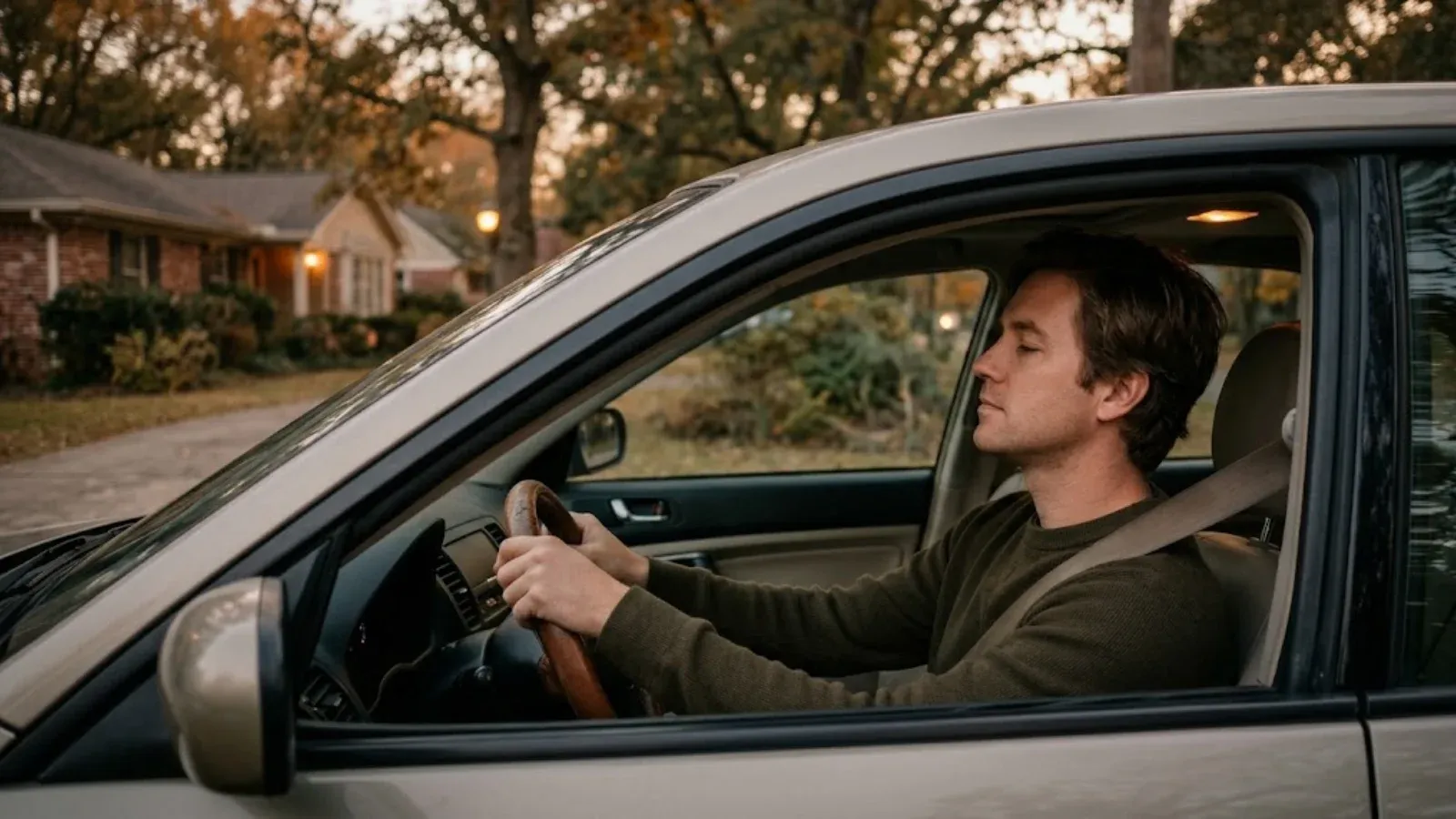
Yes, anxiety after a car accident is common, and most people recover. The VA National Center for PTSD says stress reactions such as upsetting memories, bad dreams, feeling on guard and avoiding reminders are normal after trauma and are not a sign of weakness. If symptoms last longer than a month or disrupt daily life, it is time to get checked.
This article is for drivers, passengers and parents in Texas who feel shaken after a crash, whether it was a serious collision or a fender bender. It explains what is normal, how acute stress differs from PTSD, how to ease back into driving, and when to reach out for care.
Is it normal to have anxiety after a car accident?
Yes. Fear, jumpiness, trouble sleeping and replaying the moment of impact are expected reactions in the days after a crash. The National Institute of Mental Health (NIMH) names car crashes and other accidents as traumatic events and says most people recover, with reactions lessening over time.
Common reactions include:
- Flinching at brakes, horns or the sound of tires
- Avoiding the road, the intersection or the car itself
- Feeling on edge, irritable or easily startled
- Nightmares or trouble falling asleep
- Guilt, anger or "what if" thoughts, even when you were not at fault
The VA National Center for PTSD notes that not every stress reaction is PTSD. A strong reaction early on does not mean something is permanently wrong.
What's normal in the first days, weeks and month?
Most people feel noticeably better within a few weeks, according to the VA National Center for PTSD. A rough timeline, as general education rather than a diagnosis, looks like this:
- Days 0–3: Shock, shakiness, racing thoughts, poor sleep and trouble concentrating are very common. Focus on safety, medical care and rest.
- Day 3 to 1 month: The VA describes acute stress disorder as a diagnosis that can be made from 3 days to 1 month after a trauma (as of October 2026). Many people still improve on their own in this window.
- After 1 month: PTSD can be diagnosed one month or later after the event, per the same VA page. Symptoms that are still strong at this point deserve an evaluation.
Improvement is rarely a straight line. A good week can be followed by a bad day, especially after a near miss or a trip past the crash site.
Is it acute stress disorder, PTSD or driving anxiety?
The main difference is timing and how much the symptoms interfere with life. The American Psychiatric Association (APA) states, as of October 2026, that acute stress disorder symptoms occur between 3 days and 1 month after the event, that about half of people with acute stress disorder go on to have PTSD, and that PTSD requires symptoms lasting more than a month.
The VA National Center for PTSD groups PTSD symptoms into four types: reliving the event, avoiding reminders, negative thoughts and feelings, and feeling keyed up. You can read more in our guide to acute stress disorder.
Some people do not have PTSD but develop a specific fear of driving or riding in cars. That can behave like a phobia, which our article on understanding and managing phobias explains. A clinician can help sort out which pattern fits.
Why does a "minor" crash still shake you up?
Your nervous system reacts to how dangerous the moment felt, not to the repair estimate. The VA National Center for PTSD explains that PTSD can develop after a life-threatening event, and it names car accidents as an example.
A low-speed crash can still bring a split second of "this is it." Passengers often feel especially helpless because they had no control. Prior trauma, ongoing stress, pain from an injury and feeling alone can all make recovery harder, which is one reason the NIMH encourages spending time with supportive people.
Feeling shaken after a "small" accident is not overreacting. It is information about how your body processed the event.
How do you get back to driving? A step-by-step ladder
The usual approach is to return gradually, in small, safe steps, rather than avoiding the car or forcing a long drive. The VA describes in vivo exposure as gradually approaching avoided situations that are safe, using a hierarchy, and says exposure "breaks the habit of avoidance." Its example steps include driving alone in one's own neighborhood and driving in traffic.
Here is an example ladder, offered as general education. It works best when planned with a therapist:
- Sit in the parked car for a few minutes and practice slow breathing.
- Sit in the car with the engine running.
- Ride as a passenger with a calm driver on a familiar daytime route.
- Drive a short loop in your own neighborhood in daylight.
- Drive a slightly longer route with light traffic.
- Add busier roads, a highway on-ramp or evening driving.
- Drive past or through the area where the crash happened, when you feel ready.
Stay on each step until your anxiety drops noticeably before moving up. If your hands shake, your vision narrows or you feel faint while driving, pull over safely and step back down the ladder. Your physical safety comes first, and you should not drive until a medical provider says injuries or medicines allow it. Our road trip anxiety plan for drivers and passengers has more ideas for longer trips.
What helps sleep, flashbacks and replaying the crash?
Steady routines and supportive people help most in the early weeks. The NIMH recommends keeping regular routines for meals, exercise and sleep, spending time with people who support you, and avoiding alcohol or drugs to cope.
- Replaying the crash: Name it ("this is a memory, not happening now"), then ground yourself by noticing five things you can see.
- Flashbacks: Plant your feet, hold something cold and say the date out loud. Our article on PTSD flashbacks and how to cope goes deeper.
- Sleep: Keep the same wake time, limit screens and news before bed, and get out of bed if you have been awake a long time. See PTSD and sleep for more.
- Body tension: Gentle movement, approved by your doctor if you were injured, can lower the keyed-up feeling.
The VA National Center for PTSD says upsetting dreams and memories are common after trauma. They usually fade, and they are treatable when they do not.
What to say to your doctor, therapist or family
Clear, specific words help clinicians understand how much the crash is affecting you. Before an appointment, jot down answers to this checklist:
- When the accident happened and whether you were the driver or a passenger
- Symptoms since then: nightmares, startle, avoidance, mood changes, sleep
- What you now avoid: driving, highways, the crash location, being a passenger
- Whether you had a head injury, lost consciousness or have new headaches
- Alcohol or other substance use since the crash
- How work, school, parenting or relationships have changed
Example script for a first visit: "I was in a car accident about five weeks ago. Since then I have nightmares most nights, I avoid the highway, and I've missed work. I'd like help figuring out whether this is PTSD and what treatment might fit."
Example script for family who say "just get back on the road": "I want to drive again, and I'm working on it step by step. Pushing me makes it harder. What helps is riding with me on short trips."
The VA National Center for PTSD advises talking to a counselor or doctor when reactions interfere with work or relationships.
When to get help sooner: red flags
Some signs mean you should reach out now rather than wait a month. The VA National Center for PTSD recommends seeing a provider if symptoms last longer than a month, are very upsetting, or disrupt daily life.
- Thoughts of suicide or of not wanting to be alive. Call or text 988, which is free, confidential and available 24/7.
- Drinking or using drugs to sleep, calm down or get through a drive
- Symptoms that are getting worse after the first few weeks
- Being unable to work, care for children or leave the house
- Panic, dissociation or freezing while driving that makes driving unsafe
- Any sign of a possible head injury, such as confusion or a headache that gets worse. These need prompt medical evaluation, so contact a medical provider or go to an emergency department.
Emotional symptoms and concussion symptoms can overlap, so it is wise to rule out physical causes with a medical provider.
What does treatment look like?
Trauma-focused therapy is the main treatment for PTSD and lasting anxiety after a car accident, and medication is an option to discuss with a prescriber. The VA National Center for PTSD lists trauma-focused therapies, including cognitive processing therapy (CPT), prolonged exposure (PE) and eye movement desensitization and reprocessing (EMDR), as effective for PTSD.
For distress in the first month, the VA notes that cognitive behavioral therapy (CBT) is indicated. The APA describes both psychotherapy and medication as evidence-based treatments for PTSD. If medication is discussed, talk with your prescriber about benefits and side effects, and do not start, stop or change any medicine on your own.
Treatment also addresses driving fear directly, often with a gradual exposure plan like the ladder above. Which specific therapy types a given clinician offers requires confirmation.
Getting care after an accident in Texas
In Texas, you can often get care for anxiety after a car accident without driving to an appointment. Lyte Psychiatry offers telehealth visits to patients who are physically located in Texas at the time of the visit, which helps if driving is the very thing you are avoiding.
If you are in crisis, the Texas Health and Human Services Commission lists 24/7 crisis lines run by Local Mental Health Authorities, including MHMR of Tarrant County at 800-866-2465 and the North Texas Behavioral Health Authority (Dallas area) at 866-260-8000, as of October 2026.
Many people also have legal or insurance questions after a crash. Those rules vary by state and situation, so legal questions belong with an attorney and insurance questions with your insurer. This article does not give legal advice.
If the holidays mean long drives to see family, our holiday travel anxiety tips can help you plan.
Getting support in Texas
Lyte Psychiatry offers therapy, psychiatric evaluation and medication management in Texas. You can learn more about PTSD care and anxiety treatment.
- In-person visits are available at Lyte Psychiatry's clinic in Pantego, in the Dallas–Fort Worth area.
- Lyte Psychiatry offers telehealth visits to patients who are physically located in Texas at the time of the visit.
- Most new patients are seen within 1–2 business days. Weekend appointments are limited.
- All Lyte Psychiatry services are available in Spanish.
- Availability, insurance and clinician fit require confirmation.
Lyte Psychiatry is an outpatient practice. It does not provide inpatient care, crisis or after-hours coverage, medically supervised detox, or intensive outpatient or partial hospitalization programs.
If you are in a mental-health crisis in the United States, call or text 988. Call 911 for immediate danger.
Educational information, not a diagnosis or individual treatment plan.
Common Questions
Frequently Asked Questions
How long does anxiety last after a car accident?
For most people, anxiety after a car accident eases within a few weeks, according to the VA National Center for PTSD. Recovery is often uneven, with good and bad days. If fear, nightmares or avoidance are still strong after a month, or if they are getting worse, it is a good idea to see a clinician for an evaluation.
Can a minor car accident cause PTSD?
Yes, it can. PTSD depends on how threatening the moment felt, not on how much damage the car took. A brief moment of fearing for your life or safety can be enough. Passengers, people with past trauma and people with little support may be more affected. A clinician can assess symptoms that last longer than a month.
What is the difference between acute stress disorder and PTSD?
The main difference is timing. The American Psychiatric Association says acute stress disorder symptoms occur between 3 days and 1 month after a trauma, while PTSD requires symptoms lasting more than a month. Symptoms are similar, including reliving the event, avoidance and feeling on edge. Many people with acute stress disorder recover without developing PTSD.
Should I avoid driving after an accident?
Short-term caution is reasonable, especially while you heal from any injuries. Long-term avoidance tends to make fear grow. The VA describes gradually approaching safe situations, such as driving in your own neighborhood before driving in traffic. Get medical clearance first if you were hurt, and consider planning the steps with a therapist.
I was a passenger. Can I still have anxiety or PTSD?
Yes. Passengers can feel just as threatened as drivers, and sometimes more helpless because they had no control. Being a passenger does not protect you from acute stress, PTSD or a new fear of riding in cars. The same signs, timelines and treatments apply, so mention your role in the crash when you talk to a clinician.
Why can't I sleep since the accident?
After a frightening event, the body can stay on high alert, which makes it hard to fall or stay asleep. Nightmares are also common. The NIMH recommends regular routines for sleep and meals and avoiding alcohol to cope. If sleep problems last more than a few weeks, talk with a clinician, because trauma-related sleep problems are treatable.
When should I see a therapist after a car accident?
See a therapist or doctor if symptoms last longer than a month, are very upsetting, or interfere with work, school or relationships. Seek help right away for thoughts of suicide, drinking to cope or worsening symptoms. Possible head-injury symptoms such as confusion or worsening headache need prompt medical evaluation first.
Can I get therapy by telehealth in Texas after an accident?
Yes, telehealth is one option. Lyte Psychiatry offers telehealth visits to patients who are physically located in Texas at the time of the visit, so you do not have to drive to an appointment. In-person visits are also available in Pantego. Availability, insurance and clinician fit require confirmation, and all services are available in Spanish.
Further Reading
NIMH — Anxiety Disorders
Diagnostic criteria and treatment options
ADAA — Anxiety Statistics
40M Americans affected — prevalence and impact data
APA — Anxiety Overview
Clinical summary from the American Psychological Association
These topic resources supplement the references linked within the article.
Your next steps for anxiety care
Choose the question that fits where you are now. Self-help tools support reflection and preparation; they do not diagnose a condition or replace care.
Who could I meet?
- Toyin Awe, PMHNP-BCPsychiatric Mental Health Nurse Practitioner
- NaTascha Jones, LPCLicensed Professional Counselor
The clinic confirms clinician fit, availability and insurance participation before scheduling.
Meet all Lyte clinicians · Understand provider roles
What will it cost, and how do I book?
Check insurance and benefits · View self-pay prices
Request an appointmentLyte Psychiatry — Texas
Anxiety Treatment — Texas
Evidence-based care for generalized anxiety, social anxiety, panic disorder, and phobias.
Find Care Near You
Lyte Psychiatry serves patients across Texas — in-person in DFW and via telehealth statewide.
Don't see your city? View all Texas locations →
Questions about cost? View insurance and payment information