Thu Oct 22 2026
Sunday Night Anxiety Before the Work Week: Why It Spikes in Fall
Why Sunday night anxiety builds before the work week, why fall makes it worse, a Sunday evening plan, a workload script, and signs it is more than the Sunday scaries.
Published by Lyte Psychiatry · Meet our care team
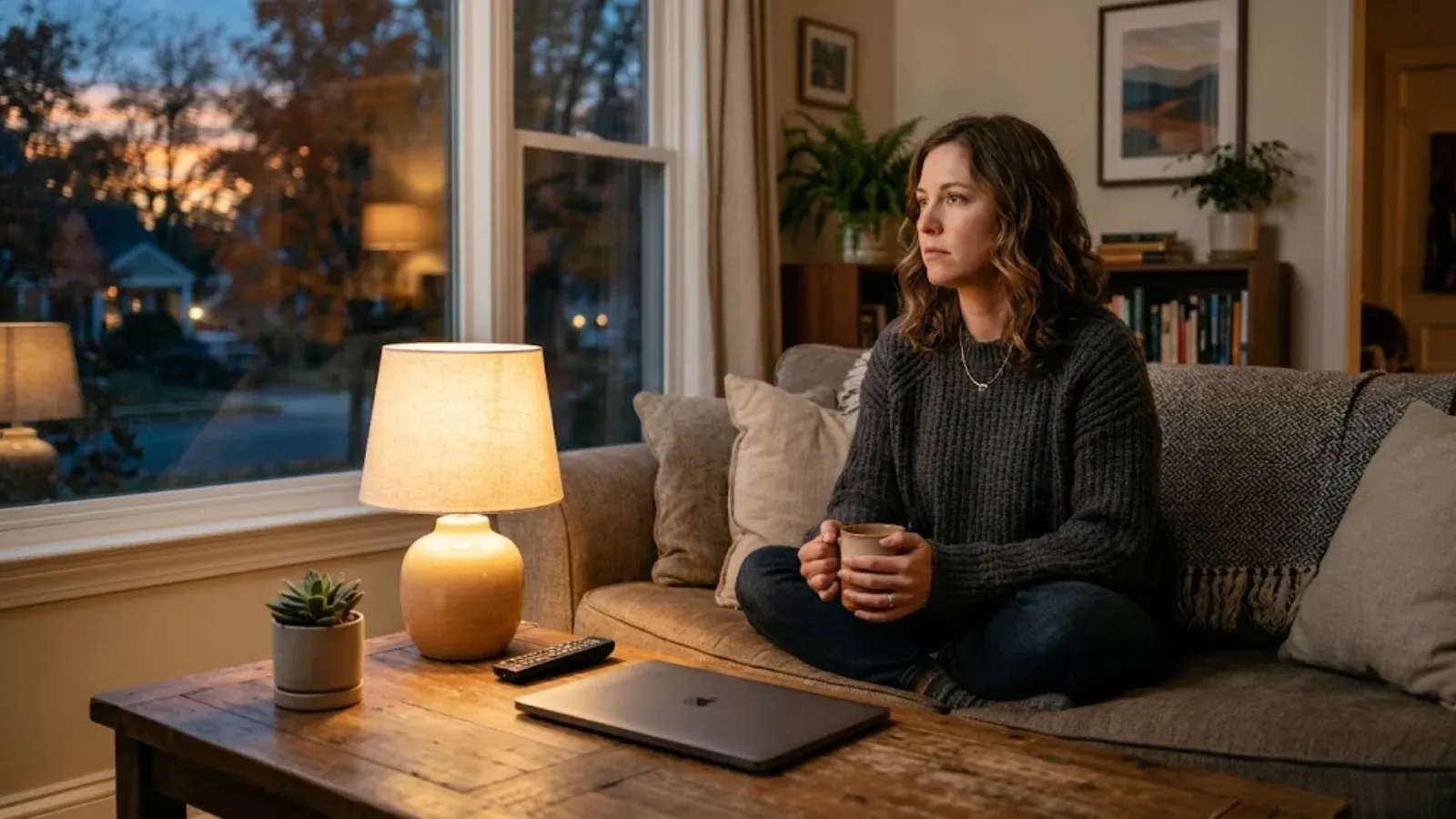
Sunday night anxiety is the dread, restlessness or low mood that builds as the weekend ends and the work week comes into view. It is usually anticipatory anxiety, not a diagnosis. This time of year it can get worse, because end-of-year deadlines stack up just as the clocks fall back and dark evenings make Sunday feel shorter.
This article is for working adults in Texas who feel their stomach drop around Sunday dinner, especially before a busy week leading into the holidays. It explains why the dread happens, gives a Sunday evening plan, offers a script for talking to your manager, and lists the signs that point to something more than the Sunday scaries.
Are the Sunday scaries a real kind of anxiety?
Yes. The Sunday scaries are a real stress reaction, even though they are not a medical diagnosis. The feeling is real: a tight chest, a busy mind, irritability, trouble settling, or a heavy sense that the weekend is already over.
The National Institute of Mental Health (NIMH) draws a useful line here. It describes stress as generally a response to an external cause that goes away once the situation is resolved, and anxiety as a persistent feeling of apprehension or dread that can continue even without an immediate threat.
Sunday dread usually sits on the stress side. It has a clear cause (the week ahead) and it often fades by Monday afternoon. When it stops fading, the picture changes, which later sections cover.
Why does dread hit before the work week even starts?
Dread hits early because the brain starts preparing for the week before the week arrives. This is anticipatory anxiety: your mind rehearses Monday's meetings, inbox and unfinished tasks as if they were happening now, and your body responds as if they were.
Three things make Sunday evening a common time for it:
- Quiet. The weekend's distractions fade, so pending worries finally get airtime.
- Uncertainty. You know the week will be busy but not exactly how, and the mind fills gaps with worst cases.
- Loss of control. Free time is ending, and you cannot fix Monday's problems from your couch.
The American Academy of Sleep Medicine (AASM) notes that when daytime distractions fade, the brain may finally have space to process thoughts put aside earlier, which is why worry can feel louder at bedtime. On Sunday, that quiet moment comes with a deadline attached.
Why does Sunday night anxiety spike in fall?
Sunday night anxiety often spikes in fall because several pressures land at once. End-of-year goals, budgets and reviews compress into fewer weeks. Holiday-season weeks are shorter but not lighter, so the same work gets squeezed into less time. Family plans and travel add a second to-do list on top of the first.
Then the clocks fall back. The AASM states that light and darkness are the most powerful timing cues for alertness and sleepiness in the human body. When it is dark by early evening, Sunday can feel over by dinnertime, and the dread starts sooner.
If the time change itself throws off your sleep, our guide to adjusting to the end of daylight saving time has a step-by-step reset. The plan below is built for the Sunday evening itself.
How do I get through Sunday from 6 pm to bedtime?
Give Sunday evening a simple structure so worry has a place to go and the rest of the night stays yours. Here is an example plan; shift the times to fit your schedule.
- 6:00 pm: do a 15-minute "week preview," then close it. Open your calendar, list the three things that matter most this week, and note the first task for Monday morning. Then close the laptop and turn off work notifications.
- 6:15 pm: name the specific worry. Write one sentence: "I am dreading ___ because ___." Vague dread feels bigger than a named problem. Ask whether it is fixable this week, needs a conversation, or is outside your control.
- 6:30 pm: move your body and get outside if there is light. A walk, a stretch or yard work helps burn off the restless energy anxiety produces.
- 7:00 pm: plan one small Monday good thing. A coffee with a coworker, a favorite lunch or an early walk gives the brain something besides threats to anticipate.
- 8:00 pm: connect or unwind on purpose. Call someone, cook, watch something light. Keep alcohol modest; it can make sleep lighter and Monday harder.
- Last 30 minutes: wind down. The AASM suggests writing worries down in the evening so they feel acknowledged and spending the last 20 to 30 minutes before bed on quieter activities, as of October 2026, per its guidance on a racing mind at night.
- In bed: notice and redirect. If work thoughts return, tell yourself "that is on the list," then shift attention to slow breathing.
What can I change during the week so Sunday is lighter?
Most Sunday dread is built from Monday through Friday, so the biggest fixes happen there. A Friday close-out routine, steady boundaries and fewer open loops reduce what you carry into the weekend.
- Close out on Friday. Spend ten minutes listing what is done, what is pending and the first Monday task.
- Track the pattern. The American Psychological Association (APA) suggests keeping a journal for a week or two to identify which situations create the most stress and how you respond, as of October 2026.
- Set work-life boundaries. The APA gives examples such as not checking email from home in the evening.
- Shrink avoided tasks. Tasks you keep putting off grow heavier by Sunday. Our post on procrastination and the anxiety avoidance cycle explains why and how to break it.
For more on coping during the workday itself, see job stress and anxiety: 5 ways to cope at work.
What do I say to my manager about my workload?
Say what you are carrying, what is at risk, and what you need, then propose options. The APA advises that a talk with your supervisor is not about listing complaints but about coming up with an effective plan for managing the stressors you have identified.
An example script you can adapt:
- Open: "Can we take 15 minutes this week to look at my priorities through the end of the year?"
- Name the load: "Right now I have [project A], [project B] and [year-end task] all due in the same stretch, plus the shorter holiday weeks."
- Name the risk: "If all three stay at this priority, I am worried the quality of [project A] will slip."
- Ask for a decision: "Which of these matters most to you? Could [task] move to January, or could someone help with [part]?"
- Confirm: "So the plan is ___. I will check back with you on ___."
You do not have to mention anxiety or a health condition to have this conversation. If you choose to, workplace rights and accommodation rules vary by employer and state, so check your HR policies.
Is it the Sunday scaries, burnout or something more?
Ordinary Sunday dread is tied to work, lifts once the week gets going and leaves your weekends mostly intact. It may be more than that when the worry spreads beyond work or your mood stays low all week.
- Generalized anxiety. The NIMH states, as of October 2026, that a diagnosis of generalized anxiety disorder requires finding it difficult to control worry on most days for at least 6 months, along with symptoms such as feeling on edge, fatigue, irritability, muscle tension or problems with sleep.
- Depression. The NIMH describes depression, as of October 2026, as symptoms most of the day, nearly every day, for at least 2 weeks, including depressed mood or loss of interest or pleasure in most activities.
- Burnout. Exhaustion and cynicism tied to work that improve with real time off. Our depression or burnout guide walks through the difference.
Some people keep performing well while the dread grows underneath. If that sounds familiar, read about signs of high-functioning anxiety.
When should I get help sooner?
Get help sooner when Sunday dread starts running your week instead of just ending your weekend. NIMH says you may be at risk for an anxiety disorder if stress interferes with your everyday life, causes you to avoid doing things or seems to be always present.
Red flags to take seriously:
- Dread that starts Saturday or lasts through Wednesday
- Panic attacks, vomiting or calling in sick to avoid the dread
- Most nights of poor sleep, not just Sundays
- Worry that has spread to health, family or money
- Low mood, numbness or loss of interest that lasts
- Drinking more to get through Sunday evening
- Thoughts that life is not worth living, or thoughts of harming yourself
If you have thoughts of suicide, call or text 988 now. The 988 Suicide & Crisis Lifeline is free, confidential and available 24/7 by call, text or chat. Call 911 if you or someone else is in immediate danger.
What should Texans know about getting help for work anxiety?
In Texas, you can start with a primary care visit, a therapist, a psychiatric clinician or telehealth, and you do not always need a referral, depending on your plan. Check your insurance before booking.
For urgent help that is not an emergency, Texas Health and Human Services (HHS) lists 24/7 crisis lines run by local mental health authorities by county; as of October 2026 it lists MHMR of Tarrant County at 800-866-2465 and North Texas Behavioral Health Authority at 866-260-8000.
A long DFW commute can add an hour of dread to Monday morning. Telehealth can help you fit care around that, but telehealth rules vary by state and the visit generally must happen while you are physically located in a state where the clinician can practice.
Getting support in Texas
If Sunday night anxiety has turned into a weekly pattern, an evaluation can sort out whether it is work stress, an anxiety disorder, depression or a mix. Lyte Psychiatry offers therapy, psychiatric evaluation and medication management in Texas.
- In-person visits are available at Lyte Psychiatry's clinic in Pantego, in the Dallas–Fort Worth area.
- Lyte Psychiatry offers telehealth visits to patients who are physically located in Texas at the time of the visit.
- Most new patients are seen within 1–2 business days. Weekend appointments are limited.
- All Lyte Psychiatry services are available in Spanish.
- Availability, insurance and clinician fit require confirmation.
Learn more about anxiety care and depression care. Lyte Psychiatry is an outpatient practice. It does not provide inpatient care, crisis or after-hours coverage, medically supervised detox, or intensive outpatient or partial hospitalization programs, so use 988 or 911 if you need help on a Sunday night.
If you are in a mental-health crisis in the United States, call or text 988. Call 911 for immediate danger.
Educational information, not a diagnosis or individual treatment plan.
Common Questions
Frequently Asked Questions
Why do I get anxiety on Sunday nights?
Sunday night anxiety is usually anticipatory anxiety. As the weekend's distractions fade, your mind starts rehearsing the week's meetings, deadlines and unfinished tasks, and your body reacts as if they were already happening. Uncertainty about the week and the sense that free time is ending both add to it. It often eases once Monday gets going.
Is Sunday night anxiety normal?
Feeling some dread before the work week is common and is not a diagnosis on its own. It becomes a concern when it lasts most of the week, spreads to worries outside work, disrupts sleep most nights, leads you to avoid work, or comes with low mood or loss of interest that does not lift. Those patterns are worth discussing with a clinician.
Why are the Sunday scaries worse in the fall?
Fall often brings end-of-year deadlines, reviews and shorter holiday weeks, so the same work is squeezed into less time. When the clocks fall back, it gets dark earlier, and Sunday can feel over by dinnertime. Holiday travel and family plans can add a second to-do list. Together these can make Sunday dread start earlier and feel heavier.
How do I stop dreading Monday?
Start during the week: close out on Friday with a short list of what is done and the first Monday task, and keep evening work boundaries. On Sunday, do one brief week preview, then switch off notifications, move your body, plan one small good thing for Monday and wind down before bed. If dread persists for weeks, talk with a professional.
Can the Sunday scaries be a sign of an anxiety disorder?
They can be, but usually they are not. As of October 2026, the National Institute of Mental Health says generalized anxiety disorder involves worry that is hard to control on most days for at least 6 months, plus symptoms like restlessness, fatigue or sleep problems. If your worry is constant rather than tied to Sunday and work, consider an evaluation.
Should I tell my manager I have Sunday anxiety?
You do not have to mention anxiety to address workload. You can describe what you are carrying, the risk to quality or deadlines, and ask which priorities matter most. If you choose to share a health condition, workplace rights and accommodation processes vary by employer and state, so review your HR policies first.
Is dreading work every week a sign I should quit?
Not necessarily. Weekly dread can come from a fixable workload problem, a short busy season, burnout, an anxiety disorder or depression, and each points to a different next step. Track when the dread starts and what it is about for a week or two, try a workload conversation, and get an evaluation if mood or sleep stay affected.
Can I get help for work-related anxiety by telehealth in Texas?
Yes, many people do. Lyte Psychiatry offers telehealth visits to patients who are physically located in Texas at the time of the visit, and in-person visits at its Pantego clinic in the Dallas–Fort Worth area. All services are available in Spanish. Availability, insurance and clinician fit require confirmation.
Further Reading
NIMH — Anxiety Disorders
Diagnostic criteria and treatment options
ADAA — Anxiety Statistics
40M Americans affected — prevalence and impact data
APA — Anxiety Overview
Clinical summary from the American Psychological Association
These topic resources supplement the references linked within the article.
Your next steps for anxiety care
Choose the question that fits where you are now. Self-help tools support reflection and preparation; they do not diagnose a condition or replace care.
Who could I meet?
- Toyin Awe, PMHNP-BCPsychiatric Mental Health Nurse Practitioner
- NaTascha Jones, LPCLicensed Professional Counselor
The clinic confirms clinician fit, availability and insurance participation before scheduling.
Meet all Lyte clinicians · Understand provider roles
What will it cost, and how do I book?
Check insurance and benefits · View self-pay prices
Request an appointmentLyte Psychiatry — Texas
Anxiety Treatment — Texas
Evidence-based care for generalized anxiety, social anxiety, panic disorder, and phobias.
Find Care Near You
Lyte Psychiatry serves patients across Texas — in-person in DFW and via telehealth statewide.
Don't see your city? View all Texas locations →
Questions about cost? View insurance and payment information